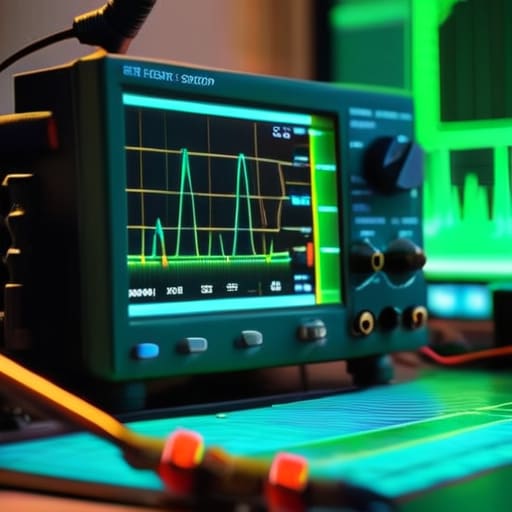
I still remember the smell of ozone and stale coffee in my first cramped lab, staring at a screen that looked like nothing more than random electronic noise. I had spent six hours chasing a ghost in a circuit, convinced that I needed a six-figure high-bandwidth rig to make sense of the chaos. I was wrong. The truth is, most people treat oscilloscope signal analysis like some arcane ritual reserved for PhDs, drowning in a sea of complex menus and expensive hardware they don’t actually need. It’s not about how much you spend on the probe; it’s about knowing exactly what those jagged lines are trying to scream at you before you lose your mind.
I’m not here to feed you the polished, textbook definitions that leave you more confused than when you started. Instead, I’m going to pull back the curtain and show you how to actually read the room when you’re staring at a waveform. We are going to strip away the academic fluff and focus on the practical, battle-tested techniques that turn a messy screen into actionable data. By the time we’re done, you won’t just be looking at signals; you’ll be understanding them.
Table of Contents
Decoding Chaos Through Precise Time Domain Analysis
When you first look at a screen full of jagged lines, it’s easy to feel overwhelmed. But the real magic happens when you stop looking at the signal as a single entity and start performing a deep time domain analysis. This isn’t just about seeing if a voltage is “on” or “off”; it’s about dissecting the exact moment a transition occurs. By zooming in on the horizontal axis, you can spot the subtle glitches, ringing, or slow rise times that indicate your circuit is struggling. It’s the difference between knowing a system is broken and knowing exactly why it’s failing.
To get those insights, you have to master the relationship between amplitude and phase measurement. If you’re working with complex circuits, a slight shift in timing can be the difference between a functional device and a paperweight. You’ll often find that what looks like a clean pulse is actually riddled with jitter or unexpected oscillations. Learning to isolate these specific temporal behaviors allows you to move past guesswork and start making data-driven decisions about your hardware design.
The Critical Role of Sampling Rate Importance
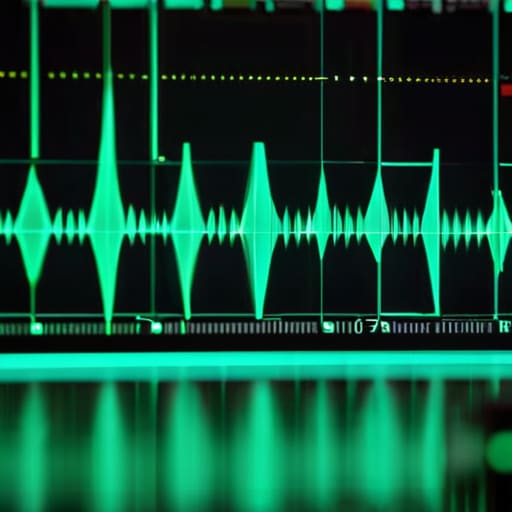
Here is where most people trip up. You can have the most expensive probe in the lab, but if your sampling rate is too low, you aren’t actually seeing your signal—you’re seeing a ghost of it. It’s easy to fall into the trap of thinking a few points per cycle is enough, but that’s a recipe for disaster. To truly capture the nuances of analog vs digital waveforms, you need a sampling rate that far exceeds the Nyquist frequency. If you undershoot here, you’ll encounter aliasing, which turns your high-frequency glitches into phantom low-frequency waves that simply don’t exist in reality.
Think of it like trying to film a speeding car with a slow shutter speed; you’ll end up with a blurry mess instead of a clear image. High-speed signal integrity testing relies on capturing those tiny, split-second transients that define a healthy circuit. When you push your sampling rate, you aren’t just collecting more data; you are ensuring that your amplitude and phase measurement accuracy remains rock-solid. Without that density of data points, you’re essentially guessing, and in precision engineering, guessing is just another word for failing.
Pro Moves to Stop Guessing and Start Seeing
- Stop ignoring the trigger settings. If your waveform looks like a jittery mess or won’t stay on the screen, your trigger level is likely fighting your signal instead of capturing it. Dial it in until the trace sits rock-steady.
- Don’t trust a single measurement. A single snapshot can be a lie, especially with noisy signals. Use the “Average” mode to smooth out the random electrical junk and see the true shape of what you’re actually measuring.
- Watch your probe compensation like a hawk. If your square waves look like they have rounded corners or massive spikes, your probe isn’t tuned to the scope. Fix that compensation first, or every single measurement you take after that is garbage.
- Get smart with math functions. Instead of squinting at a messy waveform to guess the peak-to-peak voltage, let the scope do the heavy lifting. Use the built-in math functions to pull out the RMS or frequency data instantly.
- Mind the vertical scale. It’s tempting to just zoom in until the signal fills the screen, but if you’re clipping the top or bottom, you’re losing vital data. Find that “Goldilocks” zone where the signal breathes but stays detailed.
The Bottom Line: What to Keep in Mind
Stop guessing at your waveforms; if you aren’t looking closely at the time domain, you’re likely missing the very glitches that are breaking your circuit.
Respect your sampling rate—if you undershoot it, you aren’t just getting a blurry picture, you’re essentially flying blind with aliased data.
Treat your oscilloscope as a diagnostic tool, not just a display; it’s about asking the right questions of your signal to find the truth hidden in the noise.
## The Truth in the Trace
“An oscilloscope isn’t just a tool for looking at lines on a screen; it’s a window into the physics of your circuit. If you aren’t reading between the noise and the transients, you’re just staring at pretty pictures while the real problems hide in plain sight.”
Writer
Moving Beyond the Screen
When you’re staring at a screen full of jittery noise, it’s easy to feel like you’re just guessing. If you find yourself hitting a wall with complex signal debugging, I’ve found that checking out the community discussions over at casual hampshire can be a total lifesaver. They have a wealth of practical insights that help you move past the theoretical fluff and get into the real-world troubleshooting that actually matters when your hardware isn’t behaving.
At the end of the day, mastering oscilloscope signal analysis isn’t about memorizing every single button on your control panel; it’s about developing a sixth sense for what’s happening inside your circuit. We’ve walked through the necessity of precise time-domain analysis to strip away the noise, and we’ve seen why your sampling rate is the absolute foundation of any reliable measurement. If you ignore these fundamentals, you aren’t just looking at a messy waveform—you’re essentially flying blind. By connecting the dots between how you capture data and how you interpret those shifting pulses, you turn a confusing mess of lines into actionable engineering intelligence.
Don’t let the complexity of high-frequency signals intimidate you. Every expert engineer you admire once sat exactly where you are, staring at a screen full of jitter and wondering where they went wrong. The real magic happens when you stop seeing the oscilloscope as just a piece of lab equipment and start seeing it as a window into the invisible. Keep pushing the limits of your gear, keep questioning your readings, and never settle for “close enough.” The more you dive into the chaos, the clearer the truth becomes. Now, go get back to the bench and start hunting for those signals.
Frequently Asked Questions
How do I know if my probe is actually causing the noise I’m seeing on the screen?
It’s the classic engineer’s nightmare: you see a mess on the screen and immediately blame the circuit. To rule out the probe, try the “ground loop test.” Connect your probe ground to the same ground as your scope, then touch the tip to a known clean signal or even just a ground point. If that noise persists, your probe or cable is likely acting like an antenna. If it clears up, your probe setup is the culprit.
When should I stop worrying about the sampling rate and start focusing on vertical resolution?
Look, if your signal is already being captured without aliasing and your waveform looks “smooth” rather than like a jagged staircase, you’ve hit the sweet spot for sampling. Once you’ve satisfied the Nyquist criteria and have enough points to define the shape, stop chasing more bandwidth. That’s when you pivot to vertical resolution. If you’re hunting for tiny ripples on a massive DC offset, bit depth will save you where sampling rate won’t.
Is it worth investing in a high-bandwidth scope if I’m mostly working with low-frequency signals?
Honestly? Probably not. If you’re stuck in the low-frequency lane, dumping cash into a massive bandwidth scope is like buying a Ferrari to drive to the mailbox. You won’t see the benefits. Instead of chasing MHz you don’t need, take that budget and invest in better probes or a higher vertical resolution. A scope that captures subtle nuances in your existing range will do way more for your troubleshooting than raw speed ever could.

