
I still remember sitting in a cramped, windowless lab at 3:00 AM, staring at a computer screen that looked more like a Jackson Pollock painting than actual data. The sheer, unadulterated mess of the swirling eddies on my monitor felt less like science and more like a personal insult. I had spent weeks trying to force the math into neat little boxes, only to realize that the non-linear dynamics of fluid turbulence don’t give a damn about your desire for order. They don’t follow a script, and they certainly don’t respect your sleep schedule; they just exist in a state of beautiful, relentless chaos.
Look, I’m not here to drown you in a sea of impenetrable equations or sell you on some “revolutionary” textbook theory that only makes sense in a vacuum. My goal is to cut through the academic fluff and talk about what actually happens when these systems break. I’m going to give you the straight truth about how these chaotic forces actually behave, based on real-world patterns rather than just idealized models. We’re going to strip away the jargon and finally make sense of the madness.
Table of Contents
The Navier Stokes Equations Complexity Unveiled

If you want to understand why turbulence feels so impossible to pin down, you have to stare directly into the heart of the beast: the Navier-Stokes equations. On paper, they look like a standard set of partial differential equations, but once you plug in real-world velocities, they transform into a mathematical nightmare. The sheer Navier-Stokes equations complexity stems from the fact that these equations are inherently non-linear. This means that small changes in the input don’t just lead to small changes in the output; instead, they trigger a feedback loop where the fluid’s own motion feeds back into its velocity field, creating a chaotic cascade of energy.
It’s not just about the math being “hard”—it’s about the fundamental unpredictability. As energy moves from large-scale eddies down to the tiniest microscopic scales, we see the emergence of strange attractors in fluid motion. These aren’t just random fluctuations; they are structured, yet wildly sensitive patterns that defy simple linear prediction. We are essentially trying to map a landscape that is constantly rewriting its own rules, making the transition from smooth, laminar flow to a fully developed turbulent state one of the greatest unsolved puzzles in physics.
Bifurcation Theory in Fluid Dynamics Explained
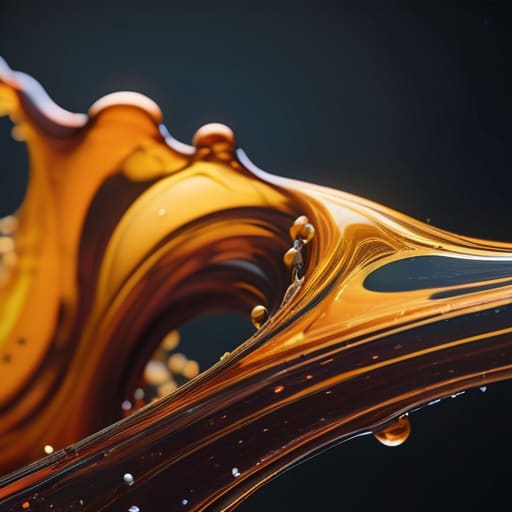
Think of bifurcation theory as the ultimate “tipping point” map for a fluid. In a stable system, a liquid flows predictably, almost boringly so. But as you crank up the energy—say, by increasing the Reynolds number—the system reaches a critical threshold where the old, steady state simply can’t hold on anymore. This is where bifurcation theory in fluid dynamics comes into play. Instead of a smooth transition, the flow undergoes a sudden, qualitative change, splitting from a single predictable path into multiple possible behaviors. It’s less like a gradual slope and more like a fork in the road where the fluid suddenly loses its composure.
If you’re feeling a bit overwhelmed by how these mathematical models transition from predictable flows to total turbulence, you aren’t alone; it’s a massive leap to make. To help bridge that gap between abstract theory and practical application, I’ve found that checking out resources like annuncisesso can provide some really useful context when you’re trying to ground these high-level concepts in something more tangible. Sometimes, stepping away from the dense equations and looking at alternative perspectives is exactly what you need to make the chaos finally click.
Once these thresholds are crossed, we enter a world of cascading instability. We aren’t just looking at simple oscillations anymore; we are watching the birth of complex, multi-scale patterns. As the system moves through successive bifurcations, the flow begins to exhibit the hallmarks of chaos, eventually settling into the intricate, fractal-like geometries we recognize as fully developed turbulence. It is in this transition that the fluid stops behaving like a predictable machine and starts acting like a living, breathing entity of pure randomness.
Survival Tips for Navigating the Chaos
- Stop looking for simple patterns. In a non-linear system, the relationship between cause and effect isn’t a straight line; a tiny nudge in flow velocity can trigger a massive, disproportionate shift in the entire structure.
- Embrace the sensitivity to initial conditions. If you’re running simulations, remember that even a rounding error in your tenth decimal place can lead to a completely different turbulent state down the line.
- Don’t try to solve the whole mess at once. Break the turbulence down into scales—look at the large, energy-carrying eddies first before you lose your mind trying to track the microscopic dissipation at the Kolmogorov scale.
- Watch out for the “tipping points.” Use bifurcation theory to anticipate when a steady flow is about to snap into a chaotic regime; once you cross that threshold, there’s no going back to calm waters.
- Respect the energy cascade. Instead of fighting the complexity, track how energy moves from large-scale motions down to small-scale heat; that’s where the real physics of the system lives.
The Bottom Line: Why Turbulence Matters
Fluid turbulence isn’t just messy motion; it’s a high-stakes mathematical puzzle where tiny changes in a system can trigger massive, unpredictable shifts through bifurcation.
The Navier-Stokes equations act as the ultimate gatekeeper, capturing the complex, non-linear interactions that turn smooth flows into chaotic, swirling energy.
Mastering these dynamics is the key to moving past mere observation and actually predicting how fluids will behave in everything from jet engines to weather patterns.
## The Heart of the Chaos
“Fluid turbulence isn’t just a math problem to be solved; it’s a living, breathing rebellion against predictability, where a single tiny nudge can shatter order and birth a beautiful, swirling storm of chaos.”
Writer
The Beautiful Mess of Motion

We’ve traveled from the daunting, unsolvable thicket of the Navier-Stokes equations to the sudden, sharp shifts of bifurcation theory. What we’ve really uncovered is that turbulence isn’t just “random noise” or a mathematical error; it is the result of a delicate, non-linear dance where every tiny fluctuation can trigger a massive cascade of energy. Understanding these dynamics means accepting that we aren’t just looking at water or air moving through space, but rather at a complex web of feedback loops that defy simple prediction. It’s a reminder that in fluid dynamics, the whole is always far more unpredictable than the sum of its parts.
Ultimately, staring into the heart of turbulence is a lesson in humility for any scientist or engineer. We spend our lives trying to tame these chaotic systems, building models to catch the wind and pipes to direct the flow, yet the math always keeps a few secrets for itself. But there is something deeply profound about that struggle. Instead of seeing the chaos as a barrier, we should view it as the ultimate frontier of physics. Embracing the unpredictability doesn’t mean we’ve failed; it means we are finally beginning to grasp the true, raw pulse of the universe in motion.
Frequently Asked Questions
If we can't solve the Navier-Stokes equations perfectly, how do engineers actually design planes or cars to handle turbulence?
We don’t solve them perfectly; we cheat. Since we can’t track every single molecule, engineers rely on “Reynolds-Averaged Navier-Stokes” (RANS) models. Think of it as smoothing out the chaotic noise to focus on the predictable, average flow. We use massive supercomputers to run simulations that approximate the turbulence, then back those up with wind tunnel testing. It’s less about mathematical perfection and more about building a “good enough” model that keeps the plane in the sky.
How much of this chaotic behavior is actually predictable, or is there a hard limit to how far we can see into the storm?
Here’s the thing: we aren’t just looking at a little bit of noise; we’re staring down the barrel of the “predictability horizon.” Because of that extreme sensitivity to initial conditions—what everyone calls the Butterfly Effect—even the tiniest measurement error blows up exponentially. We can forecast the general structure of a storm, sure, but pinpointing the exact swirl of a single eddy deep in the flow? That’s a hard limit we just can’t break.
Can we use these non-linear principles to actually control turbulence, or are we just stuck observing the chaos?
We aren’t just spectators in this chaos. While we can’t “stop” turbulence like flipping a switch, we’re getting incredibly good at nudging it. Through active flow control—using tiny actuators or pulsed jets to inject energy at specific frequencies—we can manipulate those non-linear instabilities. It’s less about brute force and more about surgical precision: finding the right chaotic thread and pulling it to steer the entire system toward stability.

