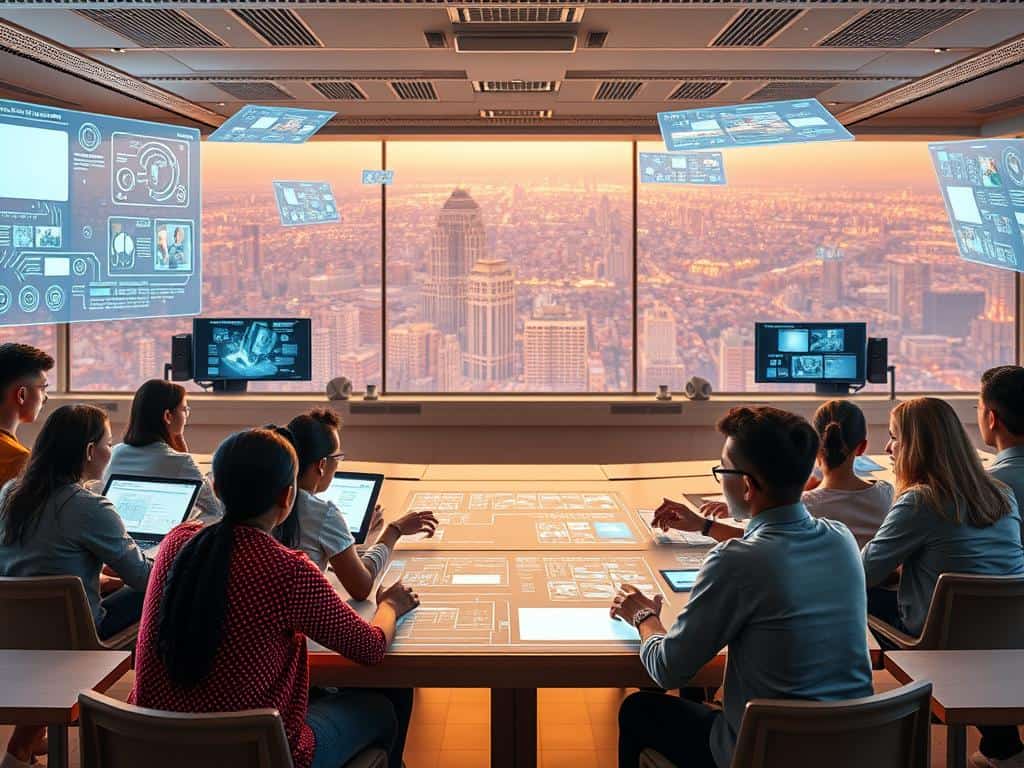
Did you know the global market for AI in education will hit $20.65 billion by 2028? This shows how big of an impact new tech will have on learning. As we look ahead to 2025, e-learning trends are changing fast. They’re influenced by AI, immersive tech, and making learning personal.
As someone who loves new ideas in education, it’s key to keep up with these trends. They’re changing how we learn and share knowledge.
Key Takeaways
- AI is driving content development and personalized learning experiences.
- Immersive learning through AR and VR is transforming educational environments.
- Microlearning is reshaping how knowledge is absorbed by modern learners.
- Mobile learning offers increased accessibility for diverse user demographics.
- The focus on tailored educational approaches is set to enhance engagement.
The Rise of Artificial Intelligence in E-Learning
The world of education is changing fast with AI. This technology helps create new ways to learn and makes studying better. Two big areas where AI makes a big difference are AI-driven content and adaptive learning.
AI-Driven Content Development
AI is leading the way in e-learning content. It can make quizzes and short learning modules quickly. This saves time and meets different learners’ needs.
It makes sure the content is up-to-date and fun to learn. This is a big win for both teachers and students.
Adaptive Learning Technologies
Adaptive learning is changing how we learn from content. It checks what you know and adjusts your learning path. This makes learning more personal and effective.
Many students love this approach. In fact, 40% say it helps them a lot. And 78% prefer learning that’s made just for them.
E-Learning Trends 2025: Immersive Learning Experiences
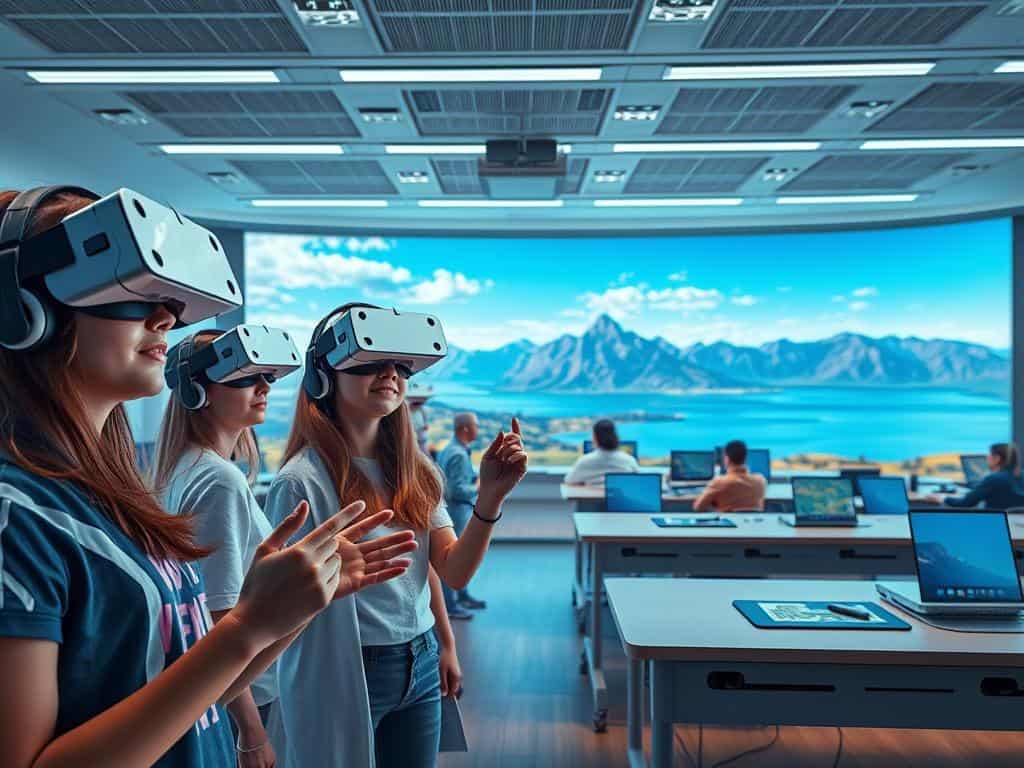
In 2025, e-learning will change a lot with augmented reality (AR) and virtual reality (VR). These tools let learners practice in real-like settings. AR makes complex ideas easier to see, while VR lets you explore and interact in real environments.
Augmented Reality and Virtual Reality Integration
AR and VR make learning more fun and interactive. They offer hands-on experiences that feel like real life. For instance, VR can train doctors for surgeries, giving them real experience.
Enhanced Training with Immersive Content
Immersive learning grabs your attention and helps you remember better. It uses all your senses to learn, making it stickier. As more places use AR, we’ll see even more of it in schools and work.
Microlearning and Mobile Learning: Adaptations for Modern Learners
In today’s fast-changing world, microlearning and mobile learning are key. Microlearning gives us short, focused lessons that fit our busy lives. It meets our need for quick, easy-to-digest content like videos and quizzes.
Shift Towards Bite-Sized Learning Modules
Millennials and Gen Z are leading the way in preferring microlearning. They like getting information in short, easy-to-understand chunks. This makes learning more efficient and fun.
Mobile Learning Accessibility
Mobile learning is huge, with 68% of learners using their phones for education. It’s all about making learning easy to do anywhere. With 77% of students saying mobile learning helps them learn more, it’s clear we need to focus on mobile-friendly content.
Conclusion
The world of e-learning is changing fast, thanks to new trends in education. Artificial intelligence is making learning more personal, fitting each student’s needs. Augmented and virtual reality are also changing the game, making learning more fun and real.
Microlearning and mobile learning are key too. They offer short, easy-to-get content that fits into busy lives. These changes help schools stay ahead in today’s fast world. They’re not just updates; they’re must-haves for a culture of learning and growth.
As we move forward, using these new tools will shape the future of e-learning. We’ll focus on making learning spaces that prepare people for new challenges. The journey is clear: to use these innovations and keep improving how we teach.

