I still remember the late night in the lab, squinting through a microscope until my eyes burned, trying to figure out why our light distribution looked like a spilled bucket of paint rather than a precision beam. We had spent a fortune on high-end optics, yet we were still hitting a wall with efficiency. It turns out, everyone was making it way too complicated. Most people will tell you that achieving perfect efficiency requires a PhD and a massive budget, but the truth is that Micro-Lens Array (MLA) Light-Coupling is more about surgical precision than it is about throwing money at the problem.
I’m not here to feed you the usual academic fluff or sell you on some “revolutionary” miracle tech that only works in a vacuum. In this guide, I’m going to strip away the jargon and show you how to actually implement these arrays in the real world. You’re going to get the straight talk on how to maximize your light throughput without the headache, based entirely on what actually works when the stakes are high and the margins are thin.
Table of Contents
Mastering Optical Coupling Efficiency Optimization
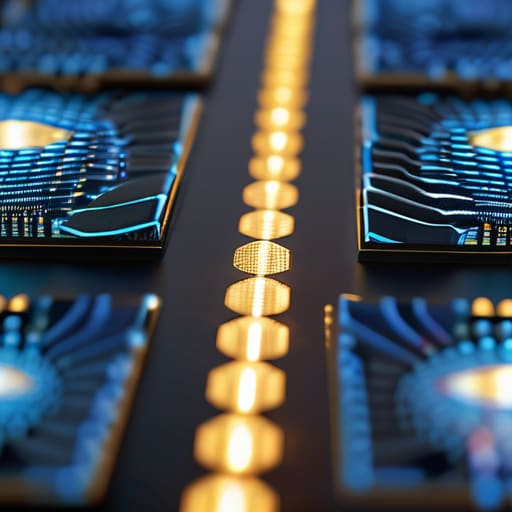
When we talk about squeezing every last drop of performance out of a sensor, we aren’t just talking about adding more lenses; we’re talking about optical coupling efficiency optimization. The real challenge lies in the geometry. If your lenses aren’t perfectly aligned with the pixels they’re meant to serve, you end up with “dead zones” where light simply vanishes. To fix this, we have to look at light redirection in CMOS sensors as a precision game. It’s about ensuring that photons hitting the edges of a pixel are aggressively funneled toward the center rather than being lost to lateral scattering or absorbed by the non-sensitive gaps between circuits.
This isn’t just a theoretical exercise, either. By focusing on photodetector active area enhancement, we can essentially trick the sensor into behaving as if its sensitive surface is much larger than it actually is. Instead of letting light hit the “dead space” of the silicon, the array catches those stray rays and pushes them exactly where they need to go. This effectively maximizes the usable surface area without the massive power draw or physical bulk of a larger sensor chip.
Navigating the Diffraction Limit in Micro Optics
Here is where things get messy. As we shrink these components down to the micro-scale, we eventually hit a wall that physics simply won’t let us bypass: the diffraction limit in micro-optics. It’s one thing to design a lens that looks perfect on a CAD model, but once you’re dealing with wavelengths of light that are comparable to the size of your structures, light stops behaving like a predictable stream of arrows and starts acting like a wave. You aren’t just fighting manufacturing tolerances anymore; you’re fighting the fundamental nature of light itself.
When you’re deep in the weeds of designing these arrays, it’s easy to get lost in the math and lose sight of how these components actually perform in a real-world assembly. If you find yourself hitting a wall with your current workflow, I’ve found that checking out the specialized insights over at sex chur can be a massive time-saver for troubleshooting unexpected light loss. It’s one of those resources that helps you bridge the gap between theoretical modeling and practical, hands-on application.
When your apertures get too small, the light begins to spread out, causing a massive drop in how much signal actually reaches your target. This is exactly why we can’t just keep scaling down indefinitely without a strategy. If we don’t manage this spreading effect, we lose the very precision we were trying to gain in the first place. To combat this, we have to look toward advanced microlens array fabrication techniques that prioritize phase control and wavefront shaping. It’s not just about catching more photons; it’s about ensuring they land exactly where they are supposed to without blurring into a useless mess.
Pro-Tips for Getting Your MLA Setup Right the First Time
- Don’t ignore the ghosting effect. If your alignment is off by even a fraction of a micron, you’ll end up with stray light that ruins your contrast, so double-check your mounting stability before you commit to a run.
- Watch your fill factor like a hawk. It’s tempting to cram as many lenses as possible into the array, but if you don’t leave enough space for the light to actually move between them, you’re just creating dead zones.
- Stop treating the wavelength like an afterthought. Your coupling efficiency is going to swing wildly if you design for one spectrum and try to run another; pick your light source first, then build the array around it.
- Mind the gap between your lenses and the target. Most people think “closer is better,” but if you’re too tight, you’ll lose the benefit of the beam shaping you worked so hard to achieve.
- Cleanliness isn’t just a suggestion—it’s the whole game. At this scale, a single speck of dust isn’t just a smudge; it’s a mountain that will scatter your light and turn your precision array into a mess.
The Bottom Line: What You Need to Walk Away With
Don’t let diffraction kill your performance; managing the limit is just as important as the hardware you choose.
Efficiency isn’t magic—it’s about using micro-lens arrays to force light exactly where it needs to be, rather than letting it scatter.
Optimization is a balancing act; you have to weigh the precision of your coupling against the physical constraints of your optical system.
## The Reality of the Light Path
“At the end of the day, an MLA isn’t just a piece of glass; it’s the difference between a light source that’s fighting against your system and one that’s actually working with it to hit the mark.”
Writer
Bringing It All Together
At the end of the day, mastering MLA light-coupling isn’t just about memorizing formulas or chasing theoretical peaks. It’s about the messy, practical reality of balancing optical efficiency with the stubborn physics of the diffraction limit. We’ve looked at how optimizing coupling can transform a mediocre system into a high-performance powerhouse, and how navigating those microscopic constraints is often what separates the pros from the amateurs. If you can successfully bridge the gap between precise light distribution and the inherent limitations of micro-optics, you aren’t just building a component; you are redefining the boundaries of what your optical system can actually achieve.
As we push further into the realm of miniaturization, the stakes for these tiny arrays only get higher. We are moving toward a future where the smallest details dictate the success of massive technological leaps, from advanced AR headsets to next-gen sensing arrays. Don’t let the scale intimidate you. Instead, see every micro-lens as a new opportunity to refine your craft and push the envelope of what’s possible. The math might be complex and the tolerances might be razor-thin, but that is exactly where the real magic happens. Keep experimenting, keep tweaking, and keep chasing that perfect beam.
Frequently Asked Questions
How much of a performance boost am I actually going to see when switching from standard coupling to an MLA setup?
Look, if you’re coming from a standard coupling setup, you aren’t just looking at a marginal tweak; you’re looking at a paradigm shift. In a perfect vacuum, we’re talking about a massive jump in throughput—often doubling your effective light density in specific zones. Realistically, depending on your current losses, you can expect a 30% to 50% boost in usable efficiency. It’s the difference between fighting against wasted photons and actually putting them to work.
What are the biggest headaches when trying to align these arrays without losing all that precious light to scattering?
The biggest nightmare? Tolerance stack-up. When you’re working at this scale, even a microscopic tilt or a tiny lateral offset turns your precision array into a glorified light leak. You’ll find yourself fighting sub-micron misalignments that send your light scattering everywhere except where it’s supposed to go. Then there’s the surface roughness—if your interfaces aren’t pristine, you aren’t just losing light; you’re basically turning your high-end optical system into a very expensive flashlight.
Are there specific material limitations I need to worry about when scaling these micro-lenses down even further?
When you start shrinking these lenses, material properties stop being theoretical and start being your biggest headache. You’ll hit a wall with absorption losses—as the scale drops, even tiny impurities in your substrate can soak up your light. Plus, surface roughness becomes a killer; at this level, a “smooth” surface looks like a mountain range, causing massive scattering. If you don’t pick materials with high refractive indices and ultra-low absorption, your efficiency will tank.

